
Absolute Hobbyz
Why Your RC Car Won’t Turn On (And How to Fix It)
Why Your RC Car Won’t Turn On (And How to Fix It) Why Your RC Car Won’t Turn On (And How to Fix It) Last updated: September 2025 There’s nothing worse than heading out to the track or trail
Last updated 2025-10-01
There’s nothing worse than heading out to the track or trail and your RC car won’t even power on. Whether you're running a brand-new RTR (Ready-to-Run) or a seasoned race rig, power issues are one of the most frustrating problems in the hobby.
This guide walks you through a step-by-step diagnostic checklist to figure out why your RC car won't turn on — and what to do about it. We’ll explain each concept clearly and provide real-world tips so even beginners can confidently troubleshoot their setup.
Understanding the RC Power System
Before we dive into the checklist, let’s review the main components that power your RC vehicle:
- Battery Pack: Most modern RC cars use LiPo (Lithium Polymer) or NiMH (Nickel-Metal Hydride) rechargeable battery packs. These provide the energy to power everything.
- ESC (Electronic Speed Control): This connects the battery to the motor and controls throttle output based on signals from the receiver.
- Receiver: A small module that receives signals from your radio transmitter and relays them to the ESC and servos.
- Power Switch: Some ESCs have an external power switch, while others turn on automatically when the battery is connected.
- Transmitter (Radio): The remote control you use to drive. It sends signals to the receiver.
Step 1: Check the Battery and Connectors
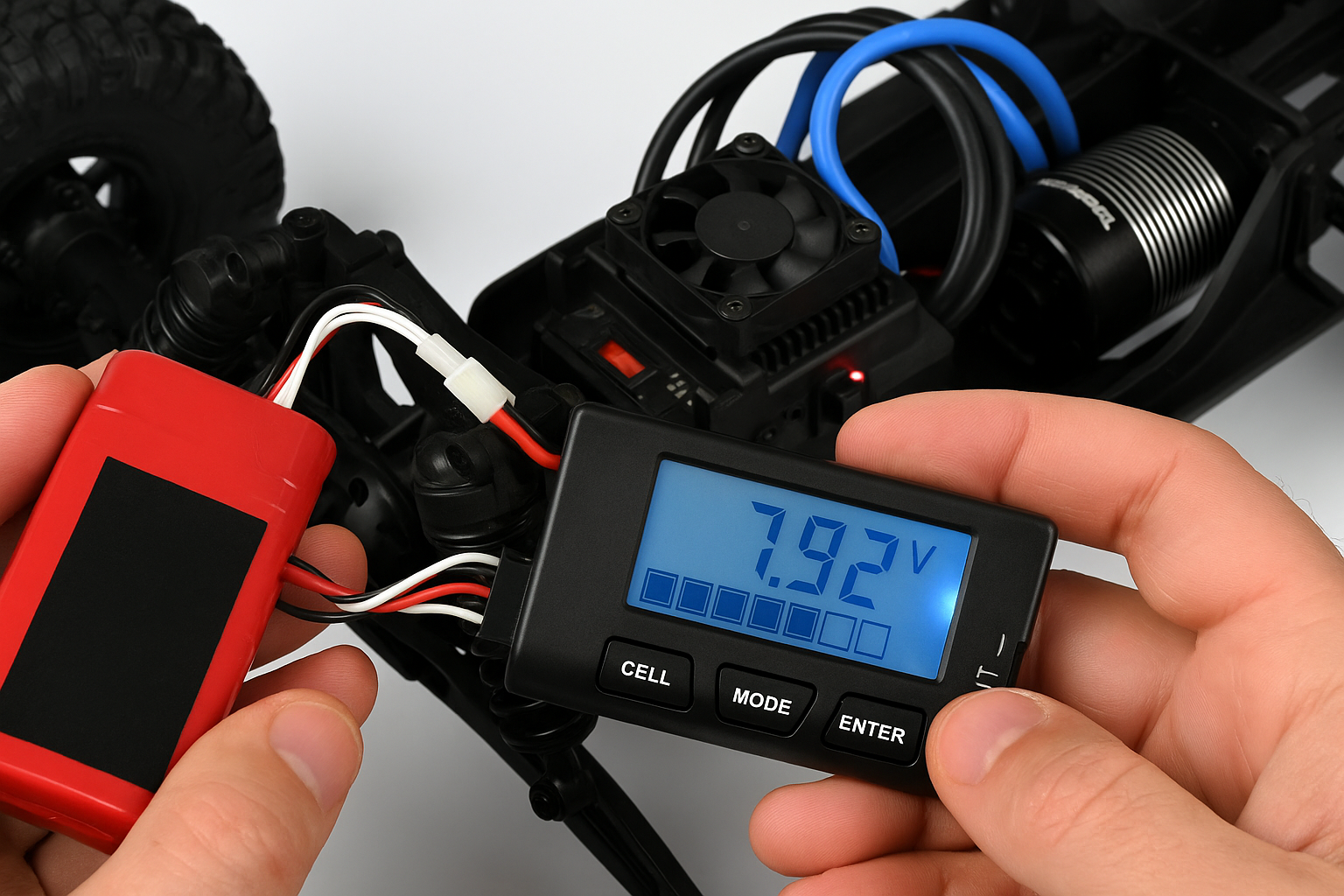
This is the most common cause of power issues. A dead or poorly connected battery can mimic more serious problems, so start here:
- Battery Charge: Use a voltage checker or look at your charger display. A fully charged 2S LiPo battery should read around 8.4V.
- Battery Type and Voltage Cutoff: LiPo batteries are powerful but sensitive. If the voltage drops too low (below 3.2V per cell), the ESC may shut down for safety.
- Connectors: Look for dirty or loose plugs. Make sure bullet or Dean-style connectors are secure. Corrosion or debris can prevent a solid connection.
Step 2: Inspect the ESC and Power Switch
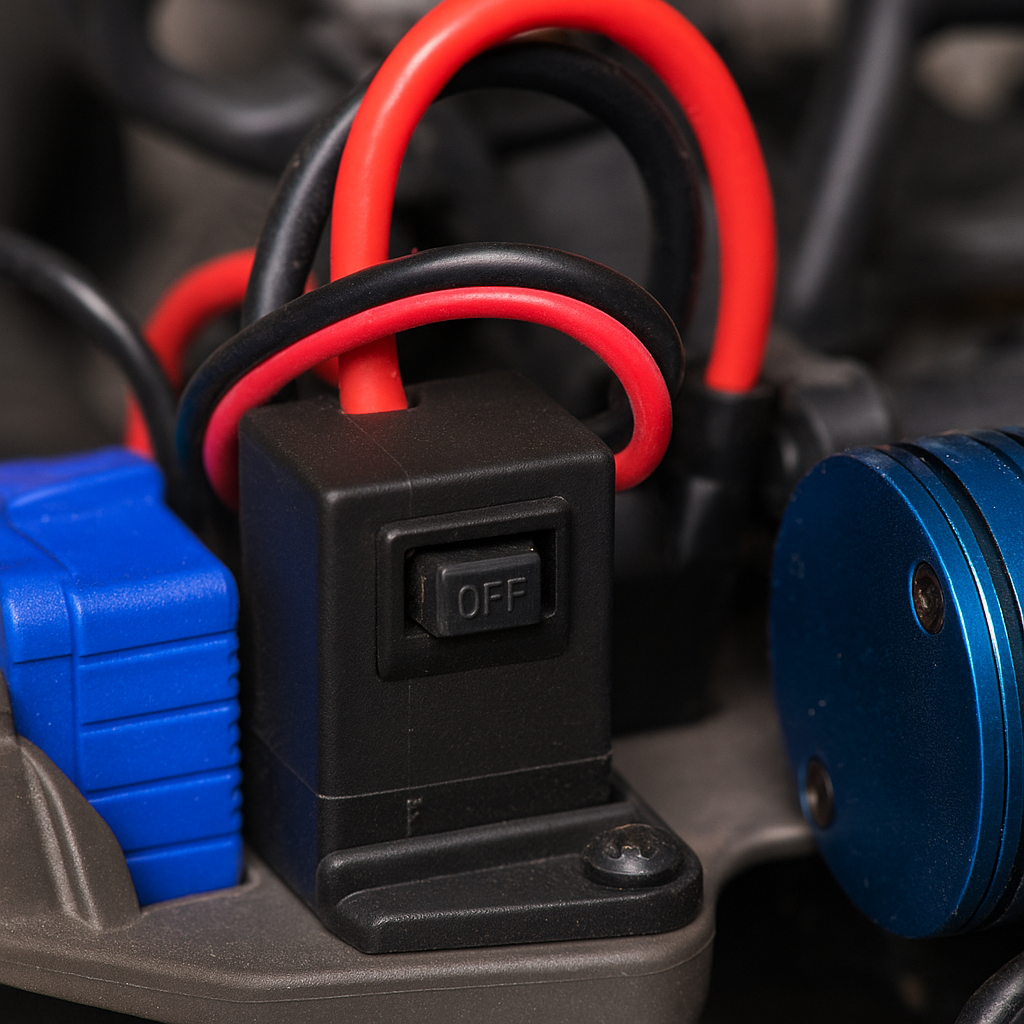
The ESC is the heart of your power system. If your battery is good but nothing lights up, this is your next stop:
- Switch Position: Ensure the power switch is fully toggled to ON. Some switches may look or feel “on” but aren’t.
- Indicator Lights: Most ESCs flash or glow when powered. If there’s no light, it might not be receiving power or could be damaged.
- Bypass the Switch: On some models, you can remove the switch and plug the battery in directly to test power delivery.
Step 3: Test the Radio and Receiver
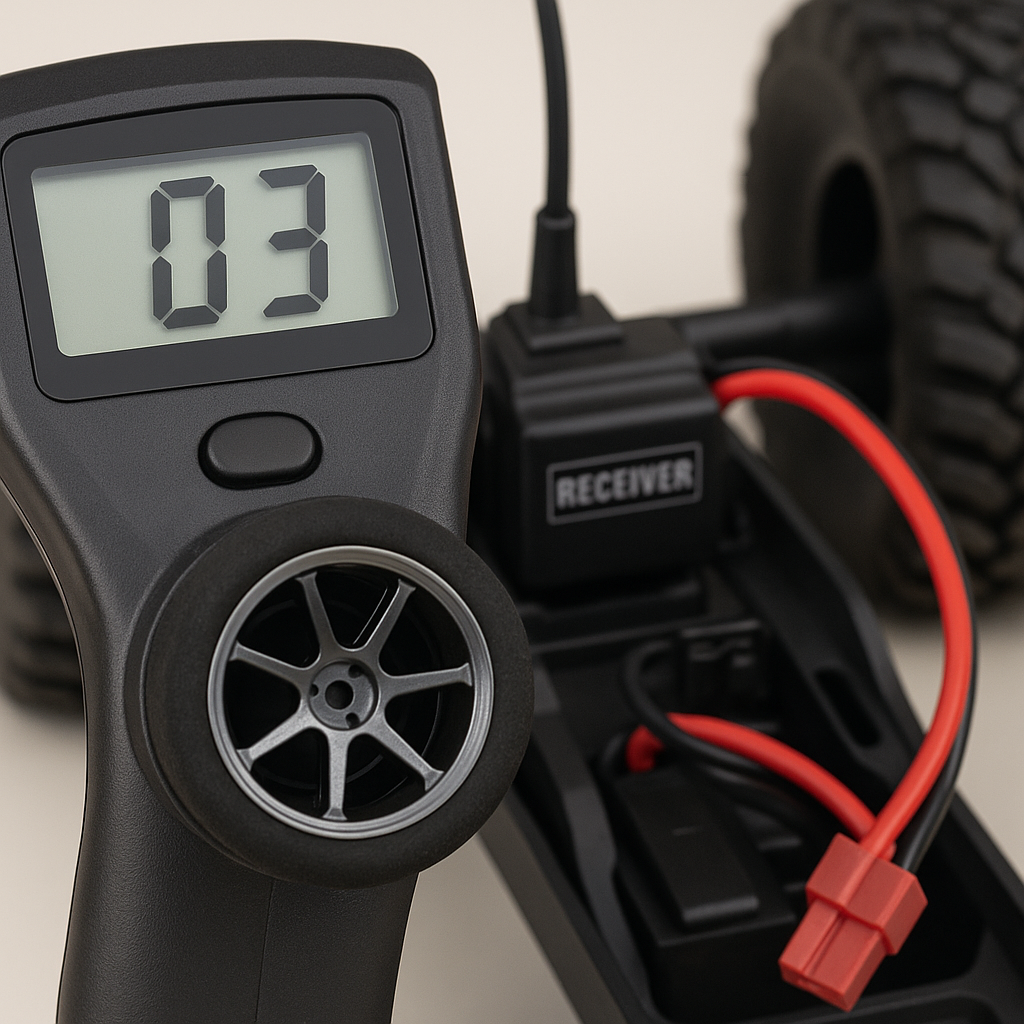
Even if power flows to the car, it won’t move without a working radio link. Here’s how to verify:
- Transmitter Check: Make sure your radio is on and the correct model memory is selected. Many radios store multiple setups.
- Binding (Rebinding): This is the process of linking your transmitter to your receiver. If your car isn’t responding, rebinding may be necessary.
- Receiver Wiring: Look for a small box with multiple channels. Channel 2 typically controls the ESC. Make sure wires are fully seated and not reversed.
Step 4: Swap or Substitute Components
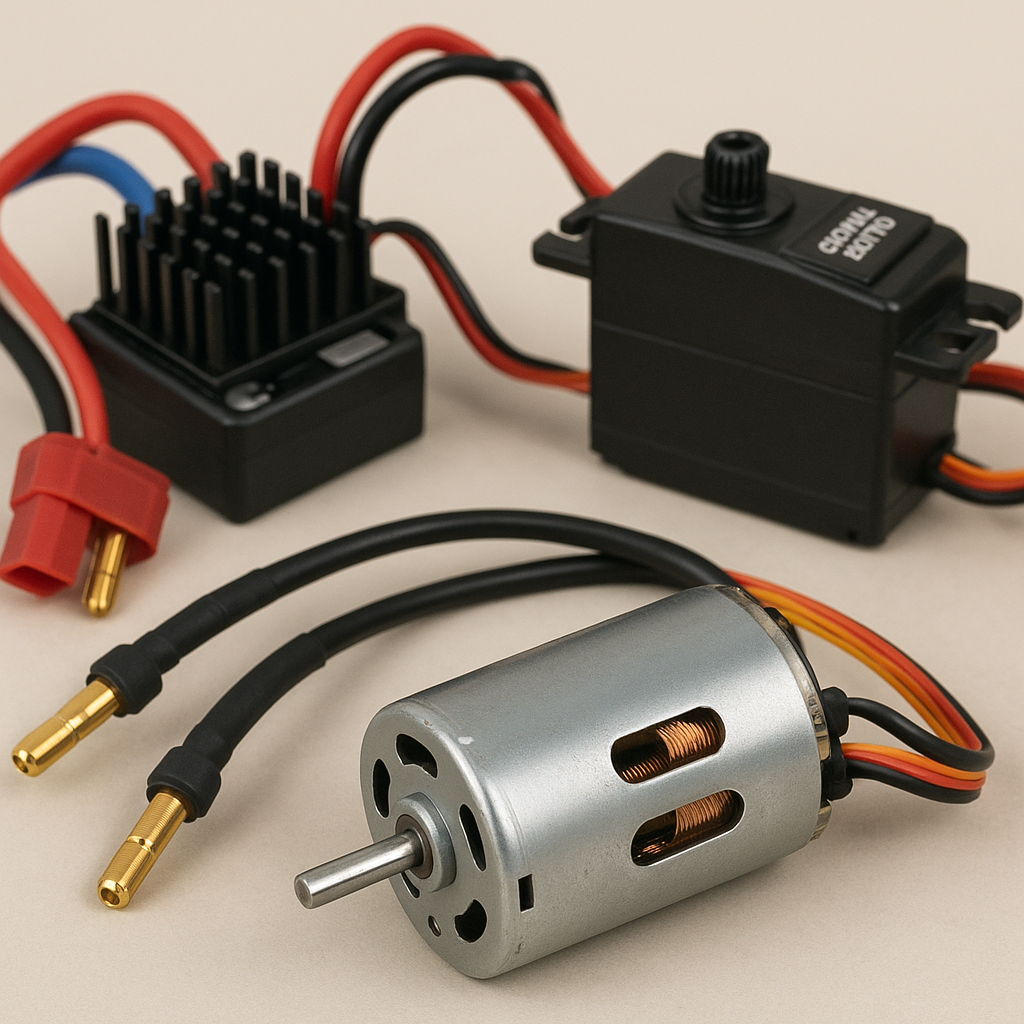
Still no luck? Try isolating each part:
- Try Another Battery: An easy and fast way to confirm or rule out a bad pack.
- Use a Backup ESC or Receiver: If you have another rig or spare parts, swapping in a known-good component can reveal the issue.
- Borrow a Radio: If using a universal brand (Spektrum, Futaba), try binding to another transmitter.
Step 5: Check for Physical Damage
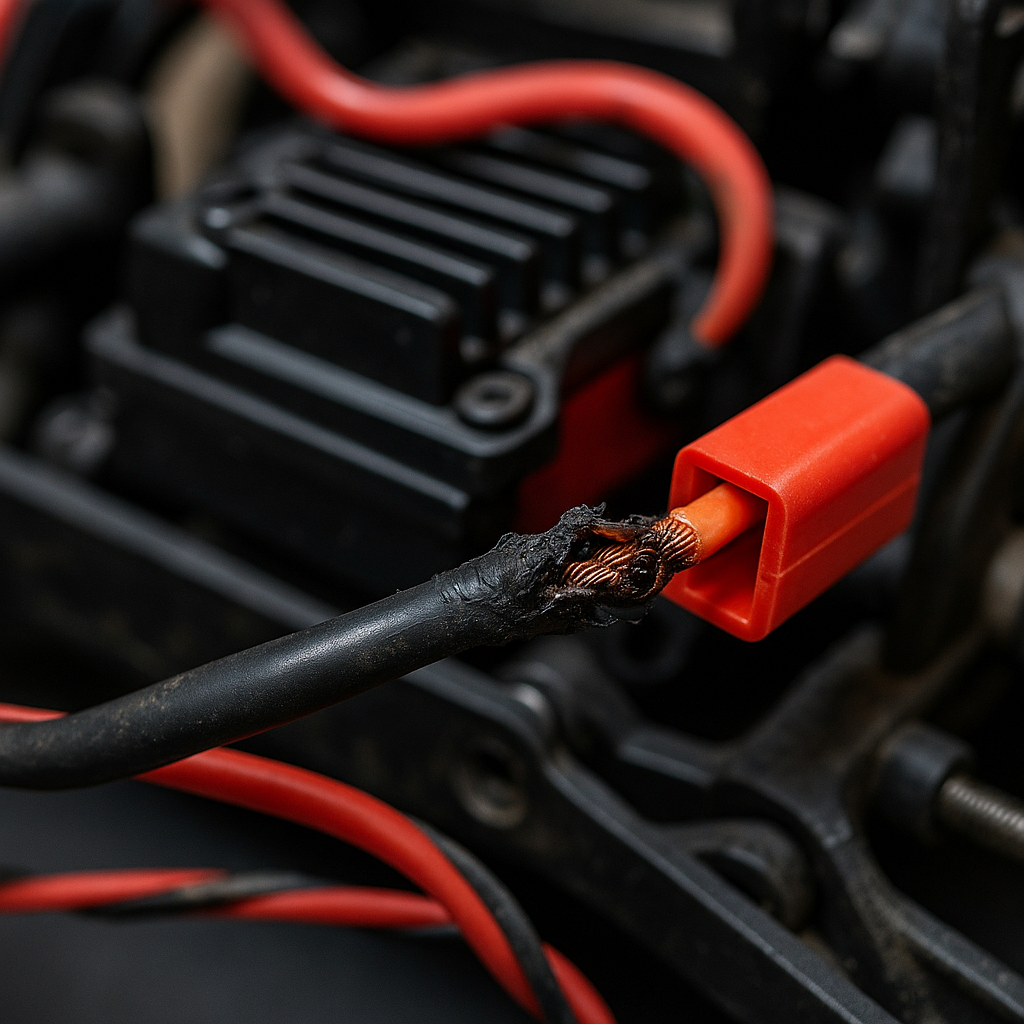
Sometimes, the problem is right in front of you. A quick inspection might reveal:
- Smells: A burned smell can indicate a fried ESC or motor.
- ESC Capacitors: These can bulge or leak when damaged.
- Wiring: Look for pinched, frayed, or melted wires that may have caused a short.
Step 6: Recalibrate or Reset the ESC
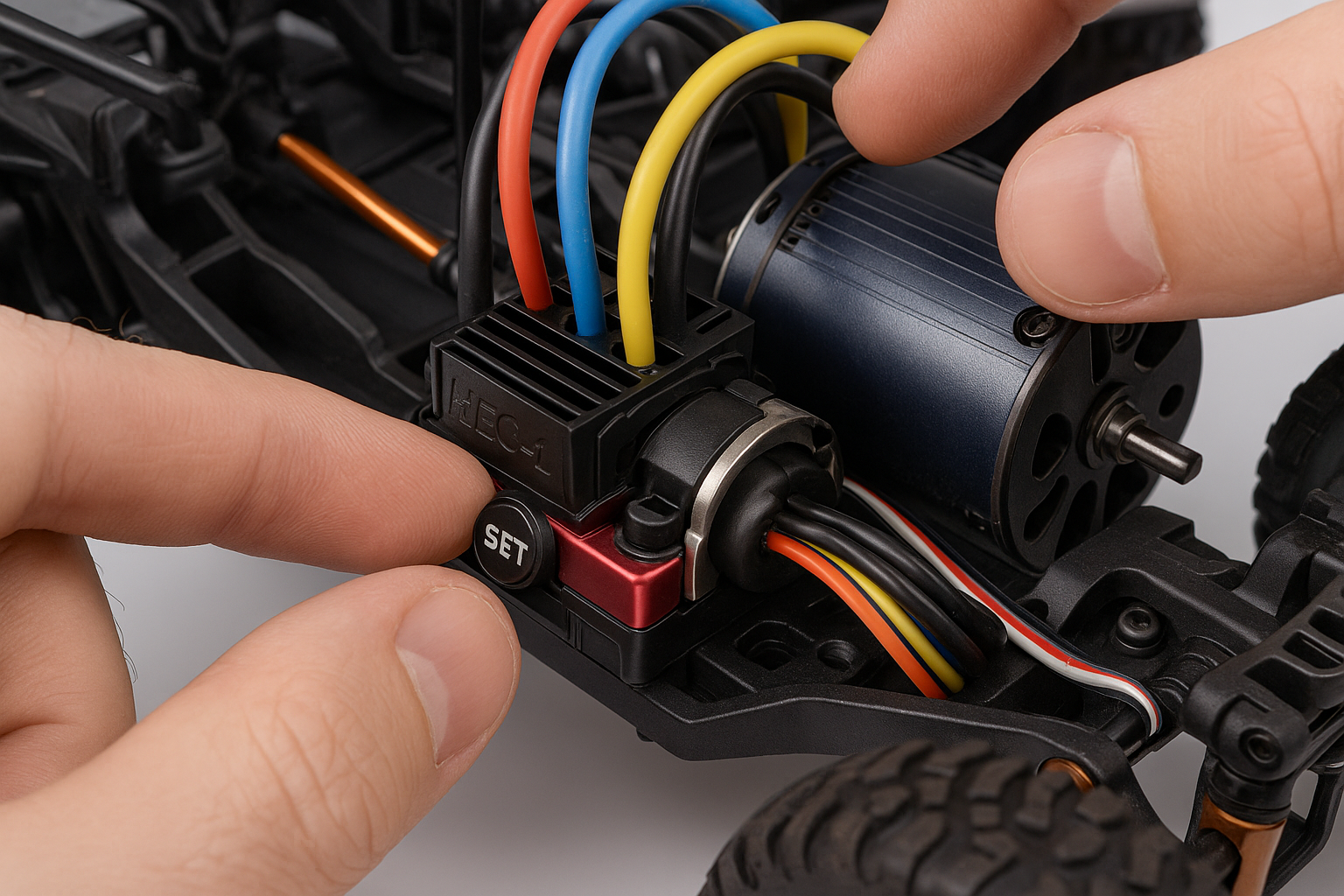
Your ESC may not be broken—just confused. Calibration ensures it recognizes your transmitter’s throttle range:
- Throttle Calibration: Power on with throttle at full, then neutral, following your ESC’s procedure.
- Reset to Factory Defaults: Many ESCs have reset options, sometimes requiring a programming card.
- Neutral Position: If your throttle trim is off-center, the ESC may not boot properly.
Step 7: Investigate Fuses or the BEC
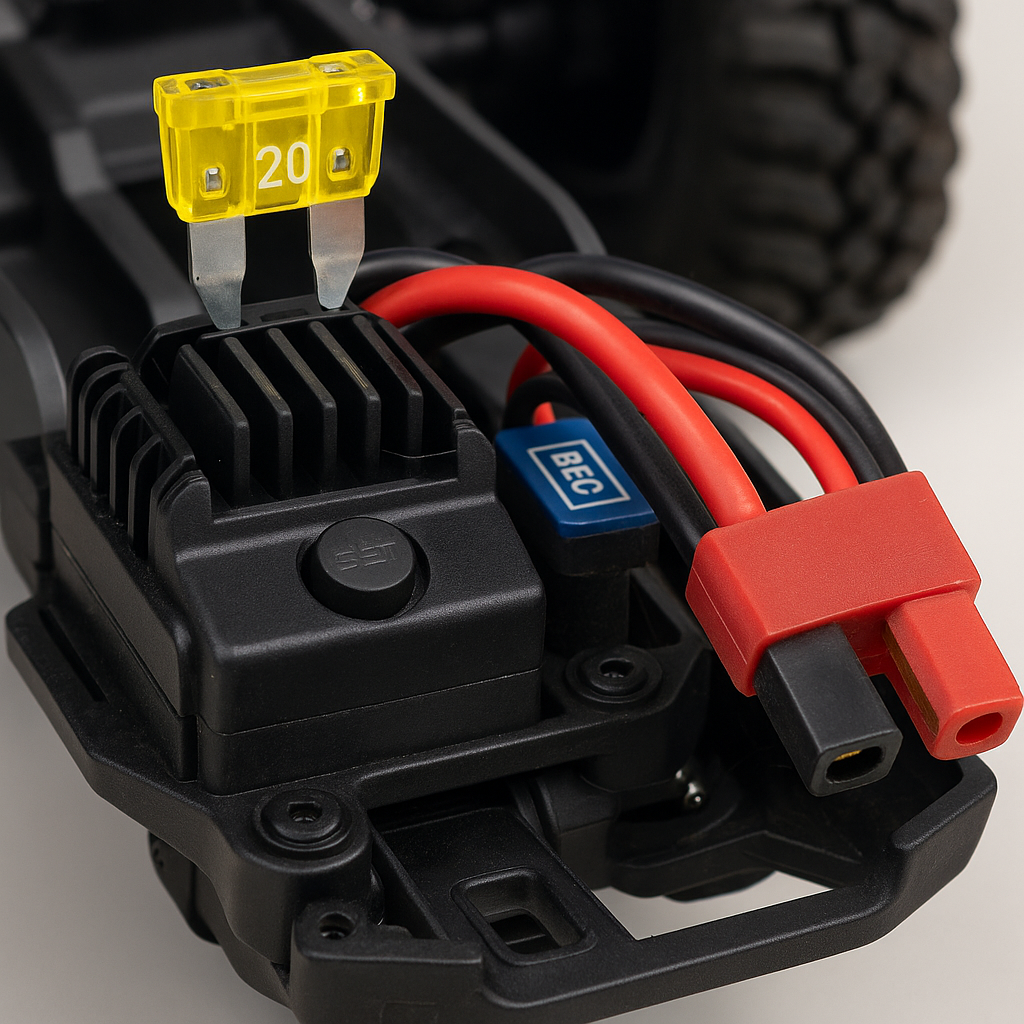
Some cars have fuses that blow under high load. Others use a BEC (Battery Eliminator Circuit) to power the receiver.
- Fuse Test: Check your manual to see if your rig includes a fuse. Replace if blown.
- BEC Issue: If the ESC lights up but there’s no signal to the receiver or servo, the internal BEC may have failed.
Extra: LiPo Battery Safety and Storage
LiPo batteries are powerful but require care:
- Always store LiPos in a fireproof bag or ammo box.
- Never charge unattended. Use a charger with balance and safety features.
- Don’t discharge below 3.2V per cell. It can permanently damage the battery.
Replace vs. Repair Cheat Sheet
ComponentSymptomsReplace?
Battery
Won’t charge, puffy, low volts
Yes (browse batteries)
ESC
No power, no LED, burning smell
Yes (browse ESC)
Receiver
Won’t bind or get signal
Yes (browse receivers)
Power Switch
Inconsistent power
Yes (browse power switches)
Radio
Car unresponsive to input
Try rebinding
FAQs
Q: Can I use a NiMH battery in a car designed for LiPo? A: Sometimes, yes — but you’ll lose performance, and the ESC must be compatible with NiMH.
Q: Why does my RC car only run for a few minutes? A: You may be using a low-capacity battery, or it could be worn out. Check your mAh rating and voltage.
Q: What does binding mean? A: Binding pairs your radio transmitter to your receiver so they can communicate.
Q: Is my ESC waterproof? A: Check the manufacturer specs. Waterproof ESCs are sealed to protect from moisture, but not all are.
Final Thoughts
Troubleshooting a dead RC car doesn’t need to be overwhelming. Start simple—check your battery, switch, and connectors. Then move through the system one part at a time. Whether you're racing or bashing, knowing how to diagnose power issues is an essential RC skill.
Need new electronics or replacement parts? Shop RC Electronics